Playback and School Bullying
Bullying is an urgent issue in schools all over the world. In 1999 Hudson River Playback Theatre (HRPT) in upstate New York began using Playback to address bullying, at the invitation of a middle school principal. It soon became clear that kids were empowered by telling and watching stories—especially by experiencing in action what they can do as witnesses.
Now, 14 years later, HRPT has used their highly developed program with over 30,000 children. And several other Playback companies are also using this approach in their own communities, including Big Apple Playback Theatre, working in the New York City area (they’ve renamed the program “Keep the Peace”); Playback Memphis (“Be the Peace”); Synergy Playback in Washington DC; and Promito Playback in Montreal. As well as performances, No More Bullying! includes a leadership program where middle and high school students learn Playback and then perform alongside adult actors for other students.
A ninth grader who took part in a NMB Leadership program said: “When I was the one telling a story, I could see things for what they were–better than trying to think back about it. It shows you what you could have done better, or what more could have been done, by seeing it in action.”

The Warmth of Stories, Winter Session 2013
21 students from 6 different countries gathered together for winter session with Tim Van Ness, Sarah Urech, Jo Salas, and Jonathan Fox for another amazing experience in Saugerties, NY, USA.
Outside, snow and very low temperatures, inside, the warmth of the stories. The many stories shared included challenges around moving forward in life; memories from childhood; relationships with family and many more. As different cultures and different levels of Playback experience united to learn, sing, play, and share, it was clear that new friendships were created and new bonds formed.
The residential programs always afford a unique opportunity to establish and connect and the comfort and beauty of the Falling Waters Retreat Center is the ideal setting for the students to spend time together in and outside of class. Every year new students attend and former students return to benefit from this unique location and to expand their Playback expertise. This year was no exception with six previous winter session students returning to continue what they began last year and in previous years.
A shout out to the Centre for Playback Theatre’s company partners that were represented:
Big Apple Playback Theatre
Maryland Playback Ensemble
Playback Theatre Sydney
River Crossing
Salem Playback
YES And… Playback Theatre

Breaking the Taboo
Report on Playback on Death & Dying.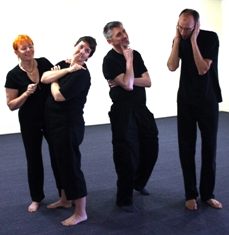
Recently, Brisbane Playback Theatre performed at a conference for palliative care nurses. Neil Simmons, who attended the Centre’s summer session, reports on their experience. “When it came to the actual show it was not clear that it would work in a large conference room with 200 audience members. Perhaps we would be seen as the light entertainment between the ‘important’ presentations on “innovation and excellence,” the conference theme. Perhaps the stories would not be so deep or personal in such a large forum. However we were assured that palliative care nurses are a down to earth bunch and would be ready to tell. As it turned out this was right and our audience came forward enthusiastically with very personal tellings which were expertly handled by our conductor. The speaker on before us had presented material about the importance of self-nurturing when you work in palliative care. Hence the first few moments of the show were about different ways that people nurtured themselves. Then followed some fluid sculptures of times when people were distressed with work. We presented a narrative V about a woman who felt ashamed about coming home and dumping all her work frustrations on her teenage son. One of the main themes of the show was creating a balance between the challenge of work and having a good life outside work. We were effective in meeting our audience and at the end the room gave us a standing ovation. This experience has spurred us on to do further work in the area of death and dying. Teachers at the Playback Centre in New York emphasized the need for building partnerships with the community on a continuing basis in order to make the work of playback effective. This is the goal over the next few years. Helping people talk honestly about death and dying reduces fear and suffering. Playback has a role to bring the discourse into a public arena.”
Sending Good Wishes to New Zealand
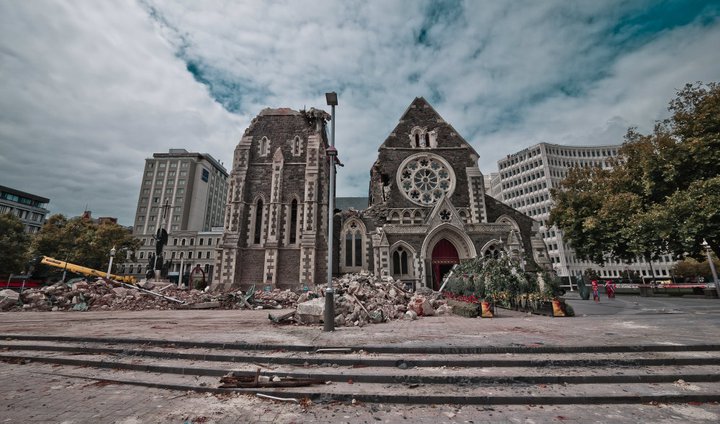
We also send our heartfelt good wishes to residents of Christchurch, New Zealand, which has been home to a Playback Theatre company since the ‘80s. Sara Crane, an experienced playback practitioner there, writes: “I will be doing some Playback with a local school next week and am assessing where to put time and energy when there are so many needs.” Since the earthquake, there is an increased sense of community, she writes, but also so much despair. And after two big earthquakes in 6 months, many people are fearing another big one.
Our Hearts Are With Japan
According to Kayo Munakata and Yas Sakurai, members of the playback community in Japan are OK, although lives have been disrupted in many ways, from having to stay in shelters because it was impossible to get home to suffering “the worst shaking I have every experienced.”
Performances and a national PT conference scheduled for the weekend of March 19, which included 19 workshops and 4 performances, have had to be canceled.
To everyone in Japan, send us news to tell us how you are and let us know how we can help.
10th International PT Conference 2011
“Playback Theatre – a Social Dialogue in a World in Upheaval“
Playback-Theater-Network e.V. and the Planning Committee for the international conference warmly invite you to take part in our November 2011 event!
You can register now at IPTN Conference 2011.
Those who register promptly can take advantage of the early bird prices, as for organizational purposes the sooner you register the better it is for us!
We are looking forward to welcoming 300 participants from around the world and an in-depth exchange of perspectives on the conference theme of “Playback Theatre – a Social Dialogue in a World in Upheaval“.
Please visit our website, IPTN Conference 2011 and have a browse.
There is space for more proposals for the conference program – for example, workshops, presentations, small performances etc. – check it out at “Call for papers“
To warm up to the conference we are running a blog, which you are invited to subscribe to with the RSS feed.
We would be delighted if you keep in touch with us via Twitter, but would be very happy too if you just pass on the news about the conference through your own Tweets, or forward this Invitation Email to others who might be interested.
See you soon in Frankfurt!
– the Planning Committee
Playback-Theater-Network

The Freedom Bus
Palestinians in towns and villages in the West Bank have been telling their stories in a series of performances by a Playback team from the famed Freedom Theatre of Jenin. This project, initiated and led by Ben Rivers, is called the Freedom Bus, inspired by the Freedom Riders of the American civil rights movement. Janet Tam of Hong Kong and Jo Salas of New York have both traveled to Jenin to provide additional training and witness performances.
Ben, who has been in Jenin since December 2011, and the Freedom Bus team have carried out shows for dozens of audiences, enacting stories of life under occupation, sometimes witnessed by groups of internationals as well. Audience members are eager to tell and listen, finding solidarity and hope together. The Playback group has also carried out shows in which children from Jenin and from Gaza have shared stories via a video hook-up. It is not possible for these young people to meet in person.
Performing at Al-Walajah
Posted on Saturday, March 9th, 2013 at 11:29 am in Uncategorized.